Halloween Castle Party Attack
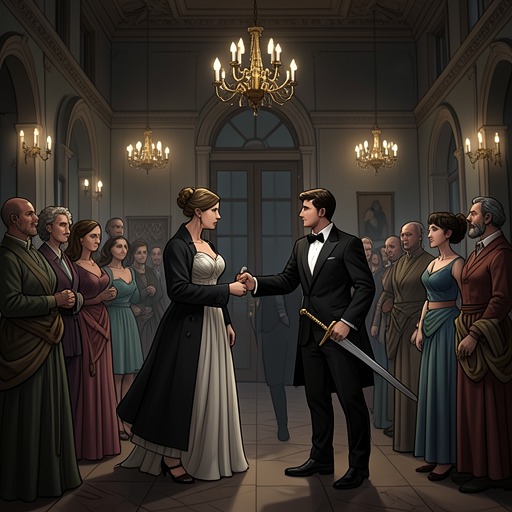
The Secret VampireHalloween Castle Party is a decisive event in which an invitation intended to introduce Celeste to Callum's world is violently corrupted. Held at Vampire Castle on Halloween, the gathering brings human college students into the home of the Vampire royal family, where hidden schemes, predatory desire, and protective loyalty surface almost at once. Carmilla uses the celebration to obtain Celeste's DNA, while Gabriel turns the castle's private spaces into a place of sexual threat. Callum's intervention ends the immediate assault, but it also exposes the danger attached to Celeste's connection with the vampires.
Causes and Background
The party follows Callum's growing relationship with Celeste and his continuing effort to remain close to her despite the strange incidents surrounding him. Two days before Halloween, Callum speaks with Celeste by telephone, and their conversation continues until late; she tells him they will meet at college the next day. When Halloween arrives, Celeste attends in a butterfly-pumpkin-princess costume with other students after Callum announces that everyone is invited to his home. The destination is not an ordinary house but Vampire Castle, a castle high on a hill, so the invitation carries an unspoken crossing from the familiar college world into the concealed vampire household.
The castle's owners have conflicting purposes for the gathering. Carmilla is eager to meet Callum's friends, but when she sees Celeste, she immediately recognizes her as the girl she has been seeking. Vlad urges Carmilla to leave the party and hunt, telling her to let the young guests enjoy themselves. Carmilla instead treats the celebration as the best opportunity to acquire Celeste's DNA. The party therefore begins under a double structure: its public surface is hospitality, while its hidden purpose is investigation and biological appropriation.
What Happens
Carmilla approaches Celeste politely, apologizing for the interruption and saying that she had hoped to meet her. Before Celeste can answer, the lights go out. Carmilla uses the darkness to take a sample of Celeste's hair, then disappears before the lights return. The brief blackout turns the party's festive atmosphere into an instrument of concealment: the crowd remains present, but the act directed at Celeste is carried out beyond its awareness.
Afterward, Celeste gets a drink and notices a mysterious young man watching her. He introduces himself as Gabriel, and the two dance. Callum observes them from a distance and experiences a bad feeling about Gabriel, an intuition that anticipates the violence to come. The contrast between dancing and watching establishes the event's central tension: ordinary social contact is repeatedly shadowed by vampire secrecy and possessive attention.
Gabriel later leads Celeste into an empty room and closes the door. He tells her that she is the most beautiful girl there and moves toward her for a kiss. Celeste pushes him away and tries to leave, but Gabriel forces her onto the bed, pins her arms, and begins kissing her neck while threatening that she will give him what he wants. The room converts the castle's romantic imagery into confinement. Celeste's refusal is clear, and Gabriel's response is physical coercion rather than courtship.
Callum enters before Gabriel can continue. Celeste calls his name while crying, and Callum reacts with immediate anger. When Gabriel dismisses the interruption and says that he is busy, Callum beats him, grabs him by the neck, and throws him down the stairs, demanding to know how he could try to hurt Celeste. Celeste runs into Callum's arms, and her tears make the assault's emotional consequence explicit. Gabriel's threat that the matter is not over leaves the conflict unresolved even though the immediate danger has ended.
Callum then notices that part of Celeste's dress has been ripped and gives her a shirt from his room to wear. He descends and announces that the party is over, ending the gathering not through formal closure but through a protective command. The castle's public celebration collapses because its private violence can no longer be contained.
Participants and Stakes
Celeste is the event's vulnerable center, but she is not merely a passive object within it. She attends as Callum's college friend and responds directly to Gabriel's advances by pushing him away, attempting to leave, and calling for help. Her hair sample is taken without consent, and her body is then subjected to an attempted assault, linking scientific exploitation and sexual coercion within the same evening.
Carmilla and Gabriel represent different forms of danger. Carmilla's action is concealed and instrumental: she uses the blackout to collect Celeste's hair because Celeste's DNA matters to her unexplained purpose. Gabriel's threat is immediate and personal, turning attraction into domination inside an empty room. Both actions violate the apparent hospitality of the party, but the narrative distinguishes their methods: Carmilla hides her intrusion within spectacle, whereas Gabriel makes his demand openly once privacy has been secured.
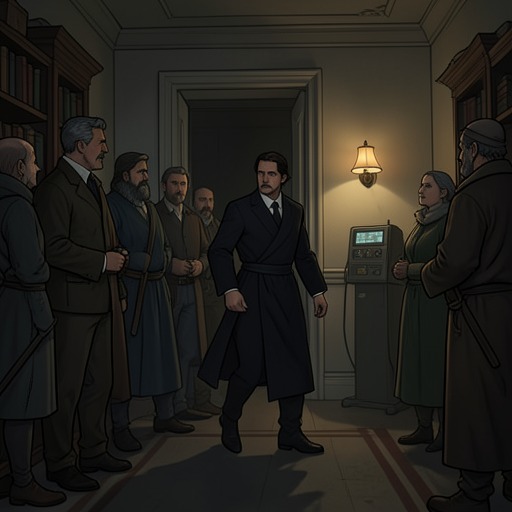
Callum occupies the unstable position of host, vampire, and protector. His suspicion of Gabriel precedes the attack, and his physical response makes his allegiance to Celeste unmistakable. By giving her his shirt and dismissing the guests, he also tries to restore her dignity after the assault. Yet his violence does not erase the wider danger. Gabriel promises retaliation, while Carmilla's secret collection of DNA suggests that the party has exposed Celeste to a larger plan than the assault alone.
Consequences and Aftermath
The most immediate consequence is the interruption of the attack and Celeste's movement from isolation back into Callum's protection. The torn dress, the shirt Callum gives her, and her crying embrace make the damage visible even though the assault is stopped. Callum's decision to end the party prevents the castle from continuing to function as a cheerful social setting after its hidden predatory logic has been revealed.
The event also deepens the division between Celeste and the vampire household. She has not simply visited Callum's home; she has been secretly sampled by Carmilla and endangered by Gabriel within it. The castle becomes both a place where Callum can rescue her and a structure that contains the threats from which she needs rescuing. Its elevated, old-world setting and enclosed rooms give the gathering a distinctly Gothic contrast between ceremony and captivity.
Later revelations reframe the party's danger within the broader conspiracy surrounding Celeste. Samara eventually admits that she killed Carmilla and Celeste's mother for power, and that she manipulated Damien's feelings by pretending to be Hannah in order to separate Celeste and Callum. Carmilla's earlier interest in Celeste's DNA therefore belongs to a story in which family secrets, magical ambition, and concealed identity repeatedly hide beneath intimate encounters. In retrospect, the Halloween party is not an isolated disturbance but an early demonstration that Celeste's presence activates rival claims upon her body, loyalty, and future.
Narrative Significance
The event's value shift is stark: a promised celebration becomes a threat, and a young relationship becomes a test of whether protection can overcome the violence embedded in the vampire world. The blackout, the empty room, the locked door, the torn clothing, and the stairs organize the sequence as a movement from social visibility into concealed danger and then back into public exposure. The party's festive disguise does not remove the Gothic menace; it gives that menace a more deceptive form.
The event also establishes a recurring pattern of women being pursued, confined, or used while revealing that female characters can possess decisive narrative power. Celeste is targeted by Carmilla's investigation and Gabriel's assault, but she later awakens a supernatural gift, identifies Samara's crimes, exposes her confession, and traps her in a magical hourglass. The Halloween attack thus foreshadows Celeste's movement from endangered guest to active opponent. Callum's rescue is crucial, but the later arc shows that survival will depend not only on his strength but also on Celeste's own emerging power and judgment.